Employee Monitoring Laws by Country: 2026 Global Compliance Guide
Track Nexus Editorial Team
Workforce Productivity Experts

Employee monitoring legislation varies dramatically across the globe, from the relatively permissive frameworks in the United States and parts of the Middle East to the stringent protections in the European Union. For organizations operating internationally or managing distributed teams across borders, navigating this regulatory patchwork is a significant compliance challenge. A monitoring practice that is perfectly lawful in Texas may violate worker rights in Germany, while an approach compliant in the UAE may fall short of Australian requirements. This comprehensive guide covers employee monitoring laws in over 30 countries as of 2026, providing the legal context you need to implement monitoring programs that respect local regulations while delivering consistent business value. Explore Track Nexus to see how privacy-configurable monitoring adapts to any regulatory environment.
Why Monitoring Laws Vary Globally
The legal landscape for employee monitoring reflects deep cultural, historical, and philosophical differences in how societies balance employer interests with worker privacy rights. Understanding these underlying factors helps organizations anticipate compliance requirements when entering new markets.
Historical and Cultural Foundations
European monitoring restrictions trace their roots to the post-World War II recognition of privacy as a fundamental human right, codified in Article 8 of the European Convention on Human Rights. The experience of totalitarian surveillance regimes in Germany and Eastern Europe created a deep cultural sensitivity to monitoring that persists today. In contrast, the American legal tradition emphasizes property rights and at-will employment, giving employers broader latitude to monitor company-owned equipment and workspaces.
In the Middle East, monitoring laws are evolving rapidly as nations like the UAE and Saudi Arabia modernize their legal frameworks. The emphasis tends toward employer authority within the employment relationship, balanced by emerging personal data protection laws.
In Asia Pacific, the picture is highly diverse. Japan's approach emphasizes harmony and indirect regulation through case law, while Australia has developed prescriptive state-level surveillance legislation. India's monitoring landscape is still developing, with the Digital Personal Data Protection Act of 2023 creating new requirements.
Key Regulatory Dimensions
When evaluating monitoring laws in any country, organizations should assess five key dimensions:
- Notice Requirements: Must employees be informed before monitoring begins? In what form? How far in advance?
- Consent Requirements: Is employee consent required? Can it be implied through continued employment, or must it be explicit?
- Scope Limitations: Are there restrictions on what can be monitored (email content, internet usage, location, keystrokes, screenshots)?
- Data Protection Obligations: How must monitoring data be stored, protected, and eventually deleted?
- Worker Representative Involvement: Must unions, works councils, or other employee bodies be consulted or consent?
The Trend Toward Greater Protection
Globally, the trend is unmistakably toward greater employee privacy protection. Between 2020 and 2026:
- Over 40 countries have enacted new data protection laws or significantly amended existing ones
- The CJEU and ECHR have issued landmark rulings strengthening employee privacy rights
- Remote work normalization has prompted new legislation addressing home office monitoring
- AI-driven monitoring tools have attracted regulatory scrutiny, with the EU AI Act classifying workplace AI systems as high-risk
Organizations that adopt a privacy-first approach to monitoring are better positioned to comply with this evolving landscape than those that pursue maximum surveillance within the bounds of their home jurisdiction's laws.
The Americas: US Federal and State Laws, Canada, Brazil, and Mexico
The Americas present a varied regulatory landscape, with the United States offering relatively broad employer latitude at the federal level but increasing state-level restrictions, while Latin American countries generally provide stronger employee protections.
United States: Federal Framework
At the federal level, US employers have significant freedom to monitor employees, particularly on company-owned devices:
- Electronic Communications Privacy Act (ECPA, 1986): Prohibits unauthorized interception of electronic communications but includes broad exceptions for employers monitoring company systems. The "business use" and "consent" exceptions effectively permit most workplace monitoring.
- Computer Fraud and Abuse Act (CFAA): Primarily targets unauthorized access to computer systems but has been used in employment contexts.
- National Labor Relations Act (NLRA): The NLRB has ruled that monitoring must not interfere with employees' rights to organize. Surveillance of union activities is prohibited.
- HIPAA: Imposes specific requirements for monitoring in healthcare settings where protected health information may be captured.
United States: Key State Laws (as of 2026)
- Connecticut (CGS Section 31-48d): Requires employers to give written notice to employees before engaging in electronic monitoring. One of the oldest and most specific state monitoring statutes.
- Delaware (19 Del. C. Section 705): Requires employers to provide advance notice of monitoring of telephone transmissions, email, and internet access.
- New York: The 2022 law requires private-sector employers who monitor employee communications to provide written notice upon hiring. The SHIELD Act adds data security requirements for monitoring data.
- California: While no specific employee monitoring statute exists, the California Consumer Privacy Act (CCPA/CPRA) grants employees data access and deletion rights that apply to monitoring data. California also has strong two-party consent wiretapping laws.
- Texas: Relatively permissive; no specific monitoring notification statute, but the Texas Identity Theft Enforcement and Protection Act imposes data security requirements.
- Illinois: The Biometric Information Privacy Act (BIPA) requires written consent before collecting biometric data, including fingerprints for time clocks and facial recognition for access control.
- Colorado, Virginia, Utah, Iowa, Oregon: These states have enacted comprehensive privacy laws between 2023-2025 that include employee data provisions.
Canada
Canadian monitoring law varies by province and is generally more protective than US law:
- PIPEDA (federal): Applies to federally regulated employers and establishes consent, purpose limitation, and proportionality requirements for personal information collection.
- Alberta PIPA: Requires that employee monitoring be reasonable and that employees be notified.
- British Columbia PIPA: Similar to Alberta with requirements for reasonable purpose and notice.
- Quebec Law 25: The most restrictive Canadian province, with GDPR-like requirements including privacy impact assessments and explicit consent for certain monitoring types.
- Ontario: While lacking a private-sector privacy law, the Employment Standards Act and common law impose duty of good faith restrictions on excessive monitoring.
Brazil (LGPD)
Brazil's Lei Geral de Proteção de Dados (LGPD), effective since 2020, closely mirrors GDPR:
- Requires a legal basis for processing employee data (consent, legitimate interest, or legal obligation)
- Mandates transparency about data collection practices
- Grants employees rights to access, correct, and delete their data
- The ANPD (National Data Protection Authority) has enforcement authority including fines up to 2% of revenue
Mexico (LFPDPPP)
Mexico's Federal Law on Protection of Personal Data establishes:
- Notice requirements through a privacy notice (Aviso de Privacidad) before data collection
- Consent requirements for sensitive personal data
- Purpose limitation and data minimization principles
- Employee rights to access, rectify, cancel, or object to data processing (ARCO rights)
Europe: GDPR, UK Post-Brexit, and Country-Specific Requirements
Europe has the most comprehensive and restrictive employee monitoring framework globally, anchored by the GDPR and supplemented by national implementing legislation.
EU-Wide: GDPR Framework
The GDPR applies uniformly across all 27 EU member states and the EEA (Norway, Iceland, Liechtenstein). For employee monitoring, key GDPR requirements include:
- A documented lawful basis for processing (Article 6)
- Data Protection Impact Assessment for systematic monitoring (Article 35)
- Transparency and prior notice to employees (Articles 13-14)
- Data minimization and purpose limitation (Article 5)
- Cross-border transfer restrictions (Chapter V)
- Fines up to EUR 20 million or 4% of global turnover (Article 83)
The 2019 CJEU ruling in CCOO v. Deutsche Bank (Case C-55/18) established that EU member states must require employers to measure daily working time, providing a strong legal basis for time tracking specifically.
United Kingdom (Post-Brexit)
After Brexit, the UK retained GDPR principles through the UK GDPR and Data Protection Act 2018:
- The Information Commissioner's Office (ICO) remains the supervisory authority
- The ICO's Employment Practices Code provides detailed guidance on workplace monitoring
- Monitoring must be necessary and proportionate; the ICO recommends impact assessments
- The UK has signaled potential divergence from EU GDPR through the Data Protection and Digital Information Act, but core principles remain intact as of 2026
- Particular restrictions apply to monitoring trade union activities under the Trade Union and Labour Relations Act
Germany
Germany imposes the most restrictive monitoring requirements in Europe:
- Works Council co-determination under Section 87(1)(6) BetrVG is mandatory
- Federal Data Protection Act (BDSG) Section 26 provides specific employee data rules
- German courts have established strong precedent against "total surveillance"
- If personal use of company IT is permitted, telecommunications secrecy applies to monitoring
- Covert monitoring is only permitted in exceptional circumstances with concrete suspicion of criminal activity
France
France combines GDPR with strong national protections:
- CNIL guidelines on workplace monitoring require strict proportionality
- CSE consultation is mandatory before implementing monitoring
- The right to disconnect (Article L.2242-17 Code du Travail) restricts after-hours monitoring
- Keystroke logging and continuous screenshot capture are generally considered disproportionate
- The CNIL has published specific guidance on remote work monitoring post-COVID
Italy
Italy's Workers' Statute (Law 300/1970, as amended by the Jobs Act) provides strong protections:
- Article 4 prohibits remote monitoring aimed at controlling worker activity
- Exceptions exist for organizational, production, safety, and asset protection needs
- Trade union agreement or labor inspectorate authorization is required for monitoring systems
- The Garante per la Protezione dei Dati Personali provides additional guidance
Spain
Spain's Organic Law 3/2018 (LOPDGDD) includes specific digital workplace rights:
- Right to digital disconnection (Article 88)
- Right to privacy in the use of digital devices (Article 87)
- Right to privacy regarding video surveillance and audio recording (Article 89)
- Specific rules for geolocation systems in the workplace (Article 90)
- GPS tracking permitted only for fleet management with employee notification
Nordic Countries
- Sweden: The Swedish Authority for Privacy Protection (IMY) requires proportionality assessments. Strong union involvement in monitoring decisions.
- Denmark: The Danish Data Protection Act supplements GDPR. Monitoring is generally permitted with notification, but continuous video surveillance of employees is restricted.
- Finland: The Act on Protection of Privacy in Working Life provides specific rules including restrictions on email monitoring and requirements for cooperation procedures.
- Norway: The Working Environment Act requires notification and proportionality. The Personal Data Act implements GDPR with additional employee protections.
Eastern Europe
- Poland: Labor Code Articles 222-223 provide specific rules for email monitoring and GPS tracking with written notice requirements.
- Romania: Data protection law requires DPIAs for monitoring and specific employee notification.
- Czech Republic: Monitoring is permitted for legitimate purposes with proportionality and employee notice.
Middle East and Asia Pacific: UAE, Saudi Arabia, India, Australia, and Beyond
The Middle East and Asia Pacific regions represent the fastest-evolving monitoring law landscapes, with several countries enacting comprehensive data protection legislation for the first time in recent years.
United Arab Emirates
The UAE has undergone significant legal modernization:
- Federal Decree-Law No. 45 of 2021 (PDPL): The UAE's first comprehensive personal data protection law, effective January 2022 with enforcement beginning in 2023. Requires lawful basis for data processing, data minimization, and transparency.
- Labor Law (Federal Decree-Law No. 33 of 2021): Grants employers broad authority to manage the workplace, including monitoring, but employees must be notified.
- DIFC and ADGM: Free zones have their own data protection laws (DIFC Data Protection Law 2020, ADGM Data Protection Regulations 2021) that closely align with GDPR.
- Monitoring is generally accepted within the employment context, but the PDPL introduces requirements for notice, purpose limitation, and data security.
- Cultural considerations: Monitoring policies should respect local customs, including adjusted working hours during Ramadan.
Saudi Arabia
Saudi Arabia's data protection framework is maturing rapidly:
- Personal Data Protection Law (PDPL, 2023): Enacted in 2021 and amended in 2023, the PDPL requires organizations to notify individuals before collecting personal data, specify the purpose, and obtain consent for non-essential processing.
- Labor Law: Employers have broad authority to establish workplace rules, including monitoring, but must include monitoring provisions in the internal labor regulation registered with the Ministry of Human Resources.
- The Saudi Data and Artificial Intelligence Authority (SDAIA) oversees PDPL enforcement.
- Violations can result in warnings, fines up to SAR 5 million, or imprisonment for serious offenses.
India
India's monitoring law landscape has evolved significantly:
- Digital Personal Data Protection Act (DPDPA, 2023): India's first comprehensive data protection law requires consent for personal data processing, purpose limitation, and data minimization. Employee monitoring data falls within scope.
- Information Technology Act, 2000: Section 43A requires reasonable security practices for sensitive personal data. Section 72A penalizes disclosure of personal data without consent.
- No specific monitoring statute: Employers generally have broad latitude to monitor company-owned devices, but DPDPA compliance is now required.
- The IT/BPO sector has historically accepted monitoring as standard practice due to client data security requirements.
Australia
Australia has one of the most prescriptive monitoring frameworks outside Europe:
- Privacy Act 1988 (Cth): The Australian Privacy Principles (APPs) apply to organizations with annual turnover exceeding AUD 3 million. Requires notice, consent in some cases, and data security.
- New South Wales Workplace Surveillance Act 2005: Requires 14 days' advance written notice before commencing surveillance. Covert surveillance requires an authority from a magistrate.
- Australian Capital Territory (Workplace Privacy Act 2011): Similar notification requirements to NSW.
- Fair Work Act 2009: Monitoring must not constitute adverse action against employees exercising workplace rights.
- The proposed Privacy Act reforms (2024-2025) are expected to strengthen employee privacy protections further.
Singapore
Singapore balances business friendliness with data protection:
- Personal Data Protection Act (PDPA, 2012, amended 2020): Requires consent for collection and use of personal data, with a business improvement exception that may cover some monitoring. Organizations must designate a Data Protection Officer.
- The PDPC has issued Advisory Guidelines on employee monitoring that recommend transparency and proportionality.
- Financial services sector has additional monitoring requirements under MAS regulations.
Japan
Japan's approach relies heavily on case law and guidelines:
- Act on the Protection of Personal Information (APPI, amended 2022): Requires specifying purposes of use and providing notice. The 2022 amendments strengthened individual rights.
- Ministry of Health, Labour and Welfare guidelines: Recommend that monitoring be conducted with advance notice, limited to work purposes, and managed by a designated administrator.
- Japanese courts have upheld reasonable monitoring but ruled against secret surveillance that violates employee dignity.
Other Notable Jurisdictions
- South Korea: The Personal Information Protection Act (PIPA) imposes strict consent requirements. Monitoring must be the minimum necessary for the stated purpose.
- Hong Kong: The Personal Data (Privacy) Ordinance (PDPO) requires data collection to be lawful, fair, and necessary. The Office of the Privacy Commissioner has issued guidance on employee monitoring.
- South Africa: The Protection of Personal Information Act (POPIA) requires that personal information processing be lawful, minimal, and with notice. The Information Regulator enforces compliance.
- New Zealand: The Privacy Act 2020 establishes Information Privacy Principles including purpose limitation and transparency requirements for monitoring.
Best Practices for Global Compliance
Organizations operating across multiple jurisdictions need a compliance strategy that satisfies the most restrictive applicable requirements while remaining practical to implement. Here are proven best practices for building a globally compliant monitoring program.
Adopt the Highest Standard as Your Baseline
Rather than maintaining different monitoring configurations for each country, adopt the most restrictive requirements as your global baseline. In practice, this typically means building your monitoring program to GDPR standards, which satisfy requirements in most other jurisdictions. This approach:
- Simplifies administration and reduces compliance risk
- Demonstrates good faith to regulators worldwide
- Future-proofs against tightening regulations in other countries
- Creates a consistent employee experience across locations
Implement a Tiered Monitoring Framework
Not all monitoring activities carry the same compliance risk. Organize your monitoring into tiers:
- **Tier 1—Universal (low risk)**: Time and attendance tracking, project time allocation. Permitted in virtually all jurisdictions with basic notice.
- **Tier 2—Standard (moderate risk)**: Application usage categorization, productivity analytics, idle time detection. Permitted in most jurisdictions with notice and legitimate purpose.
- **Tier 3—Enhanced (high risk)**: Screen content capture, email monitoring, keystroke logging. Restricted or prohibited in many jurisdictions; requires DPIA, strong justification, and may require works council approval.
- **Tier 4—Sensitive (very high risk)**: Biometric data collection, continuous video surveillance, personal device monitoring. Subject to the strictest regulations and prohibited outright in some jurisdictions.
Deploy only Tier 1 and Tier 2 monitoring globally, and activate Tier 3 or 4 only in jurisdictions where legally permitted and genuinely necessary.
Mandatory Documentation Package
Maintain a compliance documentation package for each jurisdiction where you operate:
- Local legal basis analysis for each monitoring activity
- Data Protection Impact Assessment (or equivalent)
- Employee notification template in the local language
- Consent forms (where required)
- Data retention schedule aligned with local requirements
- Data transfer mechanism documentation (for international data flows)
- Records of worker representative consultations (where required)
Technology Configuration Recommendations
- Use geographically aware monitoring configurations that automatically adjust data collection based on employee location
- Ensure data residency options are available (EU data stays in EU, Middle East data stays in the region, etc.)
- Implement automated data retention and deletion aligned with local requirements
- Provide employee self-service dashboards showing what data is collected about them
- Enable role-based access controls that restrict monitoring data to authorized personnel
- Maintain audit logs of all access to monitoring data
Regular Compliance Reviews
Monitoring laws change frequently. Establish a schedule for reviewing compliance:
- Quarterly review of regulatory changes in all operating jurisdictions
- Annual update of DPIAs and legal basis documentation
- Bi-annual review of monitoring scope and necessity
- Immediate review when entering a new market or acquiring a company in a new jurisdiction
- Review triggered by any enforcement action, court ruling, or regulatory guidance in relevant jurisdictions
Want to See It in Action?
Explore how Track Nexus's AI-powered features can transform your team's productivity with a live demo.
Use Cases & Applications
Discover how organizations use this solution to improve their operations
Global Enterprises
Multinational corporations operating in 10+ countries need a unified monitoring approach that satisfies the most restrictive jurisdiction while remaining practical across all locations. A tiered monitoring framework with jurisdiction-aware configuration is essential.
Remote-First Companies
Companies with distributed teams across multiple countries face the unique challenge that each employee may be subject to a different legal framework. Monitoring configurations must adapt automatically based on employee location and applicable laws.
Companies Entering New Markets
Organizations expanding into new countries must assess local monitoring laws before deploying existing monitoring programs. Pre-entry compliance assessment prevents costly violations and ensures a smooth employee experience from day one.
Compliance Officers
Legal and compliance professionals responsible for monitoring program oversight need a comprehensive, up-to-date reference on monitoring laws across all jurisdictions where their organization operates. Regular regulatory monitoring is essential to maintain compliance.
Frequently Asked Questions
Common questions about employee monitoring laws by country
Which country has the strictest employee monitoring laws?
Can employers monitor employees working from home?
Do monitoring laws apply to contractors and freelancers?
How often do employee monitoring laws change?
What happens if we violate employee monitoring laws?
Explore More Insights
Continue learning with these related articles
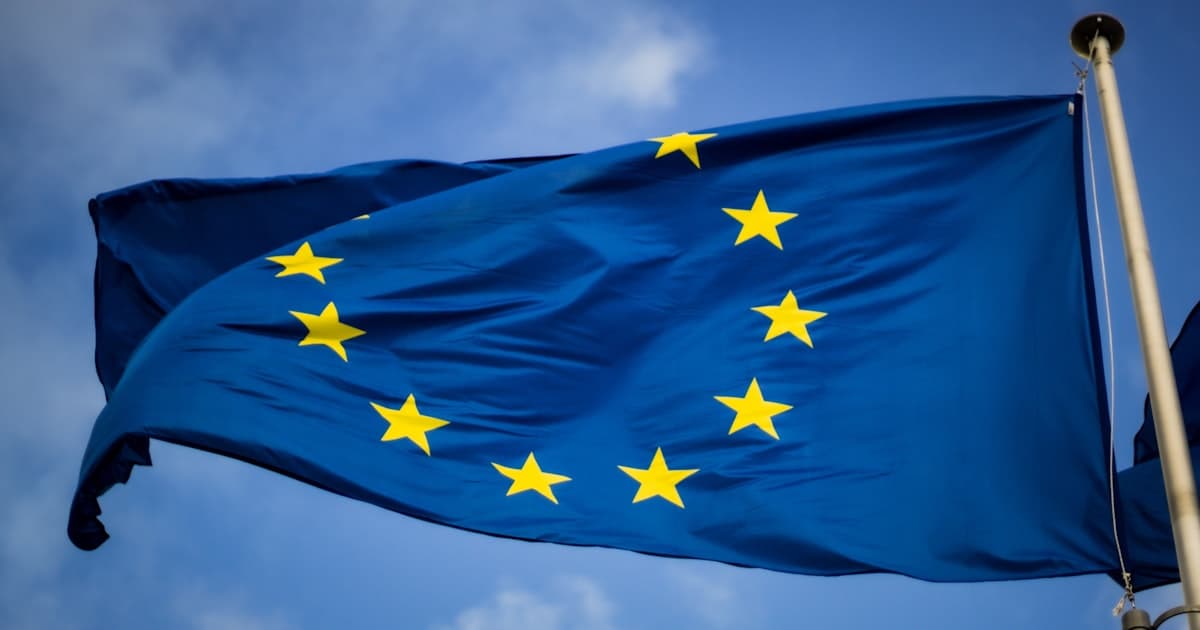
GDPR-Compliant Employee Monitoring: Complete Guide for EU Companies
Employee monitoring in the European Union operates under some of the strictest data protection regulations in the world. The General Data Protection Regulation (GDPR), which has applied since May 2018, fundamentally reshaped how organizations can collect, process, and store employee data. With fines reaching up to 4% of global annual turnover or EUR 20 million (whichever is greater), non-compliance is not merely a legal risk but a potential business-ending event. Yet monitoring is not prohibited under GDPR; it simply must be conducted lawfully, transparently, and proportionately. This guide provides a comprehensive framework for implementing employee monitoring that satisfies GDPR requirements while delivering genuine business value. Explore Track Nexus to see how privacy-first monitoring works in practice across EU jurisdictions.

Employee Monitoring Software: Ethical Oversight for Modern Teams
Employee monitoring software has evolved from simple keystroke loggers into comprehensive workforce analytics platforms. The global market reached $1.6 billion in 2025, driven by the permanent shift to hybrid work and the need for accountability without micromanagement. The best employee monitoring software balances organizational visibility with employee privacy, providing insights that help both managers and team members perform better.

Middle East Labor Law Compliance: Time Tracking for UAE and Saudi Arabia
The Gulf Cooperation Council (GCC) countries, particularly the United Arab Emirates and Saudi Arabia, have undergone a dramatic transformation in labor law and workforce regulation over the past decade. The UAE's introduction of Federal Decree-Law No. 33 of 2021, Saudi Arabia's ongoing labor law reforms under Vision 2030, and the region-wide implementation of Wage Protection Systems (WPS) have created a compliance landscape that demands sophisticated, automated workforce management. For multinational companies operating in the region, the challenge is compounded by the need to manage a diverse workforce that often comprises 80-90% expatriate workers, each with specific visa and permit requirements. Local businesses face the parallel challenge of meeting nationalization quotas (Emiratisation in the UAE, Saudization/Nitaqat in Saudi Arabia) while maintaining operational efficiency. Non-compliance carries severe consequences: fines, business license restrictions, and even criminal liability for wage violations. Automated time tracking is no longer optional in this environment; it is an operational necessity that ensures accurate working hour records, correct overtime calculation, WPS-compliant payroll, and real-time visibility into nationalization metrics. Try Track Nexus to see how organizations across the GCC region are achieving full labor law compliance while optimizing their workforce operations.

Time Tracking for Healthcare: HIPAA-Compliant Workforce Management
Healthcare workforce management is among the most complex operational challenges in any industry. With 24/7 operations, rotating shifts, strict credential requirements, union rules, and labor regulations that vary by state and country, healthcare organizations face a time tracking burden that generic business tools simply cannot handle. A 500-bed hospital may employ 3,000+ workers across nursing, physician, administrative, technical, and support roles, each with different scheduling rules, overtime thresholds, and compliance requirements. The stakes are high: understaffing compromises patient safety, overstaffing inflates costs, and labor law violations carry severe penalties. Healthcare labor costs typically represent 50-60% of total operating expenses, making workforce optimization a critical lever for financial sustainability. HIPAA adds another layer of complexity, requiring that any system handling workforce data meets stringent security and privacy standards. Modern time tracking solutions designed for healthcare address all of these challenges, providing shift management, credential tracking, automated compliance, and real-time labor cost visibility. Try Track Nexus to see how healthcare organizations worldwide are managing their workforce more effectively.
Ready to Transform Your Productivity?
Join thousands of teams using Track Nexus to optimize their workforce productivity. Schedule a personalized demo today.