GDPR-Compliant Employee Monitoring: Complete Guide for EU Companies
Track Nexus Editorial Team
Workforce Productivity Experts
Employee monitoring in the European Union operates under some of the strictest data protection regulations in the world. The General Data Protection Regulation (GDPR), which has applied since May 2018, fundamentally reshaped how organizations can collect, process, and store employee data. With fines reaching up to 4% of global annual turnover or EUR 20 million (whichever is greater), non-compliance is not merely a legal risk but a potential business-ending event. Yet monitoring is not prohibited under GDPR; it simply must be conducted lawfully, transparently, and proportionately. This guide provides a comprehensive framework for implementing employee monitoring that satisfies GDPR requirements while delivering genuine business value. Explore Track Nexus to see how privacy-first monitoring works in practice across EU jurisdictions.
GDPR Fundamentals for Workplace Monitoring
The GDPR establishes a comprehensive framework for personal data processing that directly impacts how employers can monitor their workforce. Understanding these fundamentals is essential before implementing any monitoring system.
What Constitutes Employee Monitoring Under GDPR?
The GDPR defines personal data broadly as any information relating to an identified or identifiable natural person. In the workplace context, this includes:
- Time and attendance records
- Computer and internet usage logs
- Email content and metadata
- Application usage tracking
- GPS location data
- Video surveillance footage
- Keystroke logging and screenshot capture
- Biometric data (fingerprints, facial recognition)
Any systematic collection of these data types constitutes processing under GDPR and triggers compliance obligations.
Core GDPR Principles Applied to Monitoring
Article 5 of the GDPR establishes six principles that govern all data processing, including employee monitoring:
- Lawfulness, Fairness, and Transparency: Monitoring must have a valid legal basis, must not be deceptive, and employees must be informed about what data is collected and why
- Purpose Limitation: Data collected for monitoring can only be used for the stated purpose. Time tracking data collected for payroll cannot later be repurposed for performance management without additional legal basis
- Data Minimization: Organizations must collect only the data necessary for the stated purpose. If you need to track work hours, you do not need to record screen content
- Accuracy: Monitoring data must be accurate and kept up to date, with mechanisms for employees to correct errors
- Storage Limitation: Data must not be kept longer than necessary. A six-month retention period for productivity data may be justifiable; keeping it indefinitely is not
- Integrity and Confidentiality: Monitoring data must be protected against unauthorized access, accidental loss, and destruction
The Accountability Principle
Article 5(2) introduces the accountability principle, which requires organizations to not only comply with GDPR but to demonstrate compliance. This means maintaining documentation of:
- The legal basis for monitoring
- Data Protection Impact Assessments
- Employee notification records
- Data processing agreements with vendors
- Records of processing activities (Article 30)
- Evidence of data minimization decisions
This documentation is not optional. In the event of an investigation by a Data Protection Authority (DPA), the burden of proof falls on the employer to demonstrate that monitoring was conducted lawfully.
Article 6 Lawful Bases: Legitimate Interest, Consent, and Legal Obligation
Article 6 of the GDPR lists six lawful bases for processing personal data. For employee monitoring, three are most commonly relevant, each with distinct requirements and limitations.
Legitimate Interest (Article 6(1)(f))
Legitimate interest is the most commonly relied-upon basis for employee monitoring in the EU. However, it requires a careful balancing test that weighs the employer's interests against the employee's rights and freedoms.
To rely on legitimate interest, employers must conduct and document a Legitimate Interest Assessment (LIA) that addresses three questions:
- Is there a legitimate interest? (e.g., preventing fraud, ensuring productivity, protecting trade secrets)
- Is the processing necessary to achieve that interest? (Could a less intrusive method achieve the same goal?)
- Does the interest override the employee's rights and freedoms?
Examples of legitimate interests that European DPAs have generally accepted:
- Ensuring information security and preventing data breaches
- Monitoring compliance with company policies
- Tracking billable hours for client invoicing
- Ensuring health and safety compliance
- Protecting company assets and intellectual property
Examples that typically fail the balancing test:
- Continuous keystroke logging without specific justification
- Monitoring personal communications or social media
- Constant video surveillance of workstations without security justification
- Tracking employee location outside working hours
Consent (Article 6(1)(a))
Consent is generally considered a weak basis for employee monitoring under GDPR because of the inherent power imbalance between employer and employee. The European Data Protection Board (EDPB) has stated that employee consent is rarely freely given because employees may feel pressure to agree for fear of negative consequences.
However, consent may be appropriate in limited circumstances:
- When monitoring is genuinely optional and refusal has no negative consequences
- For specific, time-limited monitoring activities
- When the employee initiates the request (e.g., requesting productivity analytics for self-improvement)
If consent is used, it must be:
- Freely given, specific, informed, and unambiguous
- Documented and easily withdrawable
- Separate from the employment contract
Legal Obligation (Article 6(1)(c))
Some monitoring activities are required by law, providing a clear legal basis. Examples include:
- Working time recording under the EU Working Time Directive (reinforced by the 2019 CJEU ruling in CCOO v. Deutsche Bank)
- Financial transaction monitoring under anti-money laundering regulations
- Health and safety monitoring required by national occupational safety laws
- Record-keeping for tax and social security compliance
The CJEU ruling in CCOO v. Deutsche Bank (Case C-55/18) is particularly significant. The Court ruled that EU member states must require employers to establish systems for measuring daily working time, providing a strong legal basis for time tracking across the EU.
Special Category Data (Article 9)
If monitoring involves special category data such as biometric data (fingerprints for time clocks), health data (wellness monitoring), or data revealing racial or ethnic origin, additional restrictions apply under Article 9. Explicit consent or specific legal authorization is typically required.
Data Protection Impact Assessment (DPIA) Requirements
A Data Protection Impact Assessment is mandatory under Article 35 of the GDPR when processing is likely to result in a high risk to the rights and freedoms of individuals. Employee monitoring almost always triggers this requirement, particularly when it involves systematic monitoring, large-scale processing, or new technologies.
When Is a DPIA Required?
The Article 29 Working Party (now the EDPB) identified nine criteria for determining whether a DPIA is required. If two or more criteria are met, a DPIA is generally necessary. Employee monitoring typically meets several:
- Systematic monitoring of employees
- Processing on a large scale
- Use of new technologies (AI-powered analytics)
- Processing that prevents data subjects from exercising their rights
- Evaluation or scoring of employees
In practice, any organization implementing employee monitoring software should conduct a DPIA. Most EU Data Protection Authorities have included employee monitoring on their published lists of processing activities requiring a DPIA.
DPIA Process and Documentation
A compliant DPIA must include the following elements:
1. Systematic Description of Processing
- What data is collected (application usage, time stamps, activity levels)
- How it is collected (desktop agent, browser extension, mobile app)
- Where it is stored and for how long
- Who has access to the data
- Whether data is transferred outside the EU/EEA
2. Necessity and Proportionality Assessment
- Why monitoring is necessary for the stated purpose
- Whether less intrusive alternatives were considered and why they were rejected
- How data minimization principles are applied
- Proportionality of monitoring scope to the business objective
3. Risk Assessment
- Risks to employee privacy and dignity
- Risk of function creep (using data for unintended purposes)
- Risk of discriminatory outcomes from productivity metrics
- Data security risks (breach, unauthorized access)
- Risk of chilling effect on employee behavior
4. Mitigation Measures
- Technical controls (encryption, access restrictions, anonymization)
- Organizational measures (policies, training, oversight)
- Employee rights mechanisms (access requests, correction, erasure)
- Monitoring governance framework (who reviews data, escalation procedures)
- Regular review schedule for the DPIA
DPO Consultation
If your organization has appointed a Data Protection Officer (which is mandatory for public authorities and organizations conducting large-scale systematic monitoring), the DPO must be consulted during the DPIA process. The DPO's advice and the organization's response must be documented.
Prior Consultation with DPA
If the DPIA identifies high residual risks that cannot be sufficiently mitigated, Article 36 requires prior consultation with the relevant Data Protection Authority before processing begins. This is relatively rare in practice but must be considered.
Ongoing Review
A DPIA is not a one-time exercise. Article 35(11) requires that DPIAs be reviewed when the nature, scope, context, or purposes of processing change. At minimum, annual reviews are recommended. Changes that should trigger a DPIA review include:
- Expanding monitoring to new data types
- Deploying AI or machine learning analytics
- Extending monitoring to new employee populations
- Changes to data retention periods
- New cross-border data transfers
Country-Specific Rules: Germany, France, Netherlands, and Beyond
While GDPR provides the overarching framework, individual EU member states have implemented additional requirements that can significantly impact employee monitoring practices. Understanding these national variations is critical for multi-country compliance.
Germany: Works Councils and the Betriebsverfassungsgesetz
Germany has some of the most employee-protective monitoring regulations in the EU. Key requirements include:
- Works Council Co-Determination (Section 87(1)(6) BetrVG): The Works Council (Betriebsrat) has co-determination rights over the introduction and use of technical equipment designed to monitor employee behavior or performance. This means monitoring cannot be implemented without Works Council agreement, even if employees individually consent.
- Federal Data Protection Act (BDSG) Section 26: Provides specific rules for processing employee data, requiring that monitoring be necessary for the employment relationship or to exercise or satisfy rights and obligations of the employees' representative body.
- Prohibition of Total Surveillance: German courts have consistently ruled that comprehensive, continuous surveillance that creates a complete behavioral profile of an employee is unlawful, regardless of consent or legitimate interest.
- Email and Internet Monitoring: If personal use of company email and internet is permitted (even informally), monitoring content becomes significantly restricted under telecommunications secrecy provisions.
France: CNIL Guidelines and Code du Travail
France's data protection authority, the CNIL, has issued specific guidance on employee monitoring:
- Prior Information Requirement: Article L.1222-4 of the Code du Travail requires that employees be informed in advance of any monitoring methods used by the employer. Information must be provided individually, not merely in a general policy document.
- CSE Consultation: The Comité Social et Économique (CSE), France's employee representative body, must be informed and consulted before implementing monitoring tools (Article L.2312-38).
- Proportionality Standard: The CNIL applies a strict proportionality test, having ruled against constant screenshot monitoring and requiring that keystroke logging be justified by specific security threats.
- Right to Disconnect: France's right to disconnect law (Article L.2242-17) impacts monitoring by prohibiting out-of-hours monitoring and requiring policies on digital disconnection.
Netherlands: Works Council Act and UAVG
The Netherlands implements GDPR through the UAVG (Uitvoeringswet AVG) with specific workplace provisions:
- Works Council Consent (Article 27 WOR): The Works Council must consent to monitoring systems that track employee attendance, performance, or behavior.
- Dutch DPA Guidance: The Autoriteit Persoonsgegevens has published specific guidance stating that covert monitoring is only permissible when there is a concrete suspicion of criminal activity and no less intrusive investigation method is available.
- BYOD Considerations: Dutch law imposes additional restrictions on monitoring personal devices used for work.
Other Notable Jurisdictions
- Spain: The Organic Law 3/2018 (LOPDGDD) includes Article 87-91 covering digital rights in the workplace, including the right to digital disconnection and explicit limits on video surveillance.
- Italy: The Workers' Statute (Law 300/1970, amended by the Jobs Act) prohibits remote monitoring aimed at controlling worker activity, with exceptions for organizational, productive, safety, or asset protection needs. Trade union agreement or labor inspectorate authorization is required.
- Austria: The Arbeitsverfassungsgesetz requires Works Council agreement for monitoring systems that affect human dignity.
- Poland: The Labor Code (Articles 222-223) provides specific rules for email monitoring and GPS tracking, requiring prior written notification.
- Ireland: The Data Protection Commission has issued detailed guidance on workplace monitoring, emphasizing transparency and proportionality.
Implementing GDPR-Compliant Employee Monitoring
Moving from theory to practice requires a structured implementation approach that embeds compliance into every stage of the monitoring program lifecycle.
Step 1: Define Clear, Specific Purposes
Before any technical deployment, document precisely why monitoring is being implemented. Vague purposes like "improving productivity" are insufficient. Specific, documented purposes might include:
- Tracking billable hours for accurate client invoicing
- Ensuring compliance with working time regulations
- Protecting confidential business information from data exfiltration
- Meeting contractual obligations for service delivery verification
- Detecting and preventing unauthorized system access
Step 2: Select Appropriate Legal Basis
For each monitoring purpose, identify and document the applicable legal basis under Article 6. Many organizations will rely on multiple legal bases for different aspects of monitoring:
- Time tracking for working time compliance: Legal obligation (Article 6(1)(c))
- Productivity analytics for resource planning: Legitimate interest (Article 6(1)(f))
- Application usage for security: Legitimate interest (Article 6(1)(f))
Step 3: Conduct and Document the DPIA
Complete a thorough DPIA following the process outlined above. Ensure the DPO is consulted and their recommendations are documented. The DPIA should be a living document, reviewed at least annually.
Step 4: Engage Employee Representatives
Before deployment, consult with Works Councils (Germany, Netherlands, Austria), the CSE (France), trade unions, or other employee representative bodies as required by national law. Even where not legally required, engaging employee representatives builds trust and improves adoption.
Step 5: Create Transparent Employee Communications
Draft a comprehensive monitoring policy that includes:
- What data is collected and through what mechanisms
- The legal basis for each type of data processing
- How data will be used and who will have access
- Data retention periods
- Employee rights (access, rectification, erasure, restriction, portability)
- How to exercise these rights and lodge complaints
- Contact details for the DPO
This policy should be provided to all employees before monitoring begins, and acknowledgment of receipt should be documented.
Step 6: Configure Privacy-First Technical Settings
Implement technical measures that demonstrate compliance:
- Enable data minimization settings (aggregate rather than individual data where possible)
- Configure automatic data deletion after the retention period
- Implement role-based access controls for monitoring data
- Enable encryption for data at rest and in transit
- Disable features that are not necessary for stated purposes (e.g., if you only need time tracking, disable screenshot capture)
- Ensure data residency within the EU/EEA or, if transfers occur, implement appropriate safeguards (SCCs, adequacy decisions)
Step 7: Establish Ongoing Governance
Create a monitoring governance framework that includes:
- Regular audits of data access logs
- Periodic review of necessity and proportionality
- Employee feedback mechanisms
- Incident response procedures for data breaches
- Annual DPIA reviews
- Training for managers who access monitoring data
Step 8: Handle Data Subject Access Requests (DSARs)
Establish a process for responding to employee requests to access their monitoring data within the 30-day GDPR deadline. Employees have the right to receive a copy of all personal data processed about them, including productivity metrics, time logs, and activity records.
Want to See It in Action?
Explore how Track Nexus's AI-powered features can transform your team's productivity with a live demo.
Use Cases & Applications
Discover how organizations use this solution to improve their operations
EU-Headquartered Companies
Companies headquartered in the EU must navigate GDPR as their primary compliance framework. A privacy-first monitoring approach ensures lawful processing while delivering workforce analytics that drive business performance.
US Companies with EU Staff
American companies with employees in the EU must comply with GDPR for those employees regardless of where the company is based. This requires adapting US-style monitoring practices to meet stricter EU requirements, including data transfer safeguards.
Remote-First EU Teams
Distributed teams across EU member states face the challenge of complying with both GDPR and varying national employment laws. Remote monitoring must balance productivity visibility with the right to disconnect and digital privacy expectations.
Multi-National Corporations
Global enterprises operating across multiple EU jurisdictions must implement monitoring programs that satisfy the most restrictive national requirements while maintaining operational consistency. Works Council negotiations in multiple countries add complexity.
Frequently Asked Questions
Common questions about gdpr-compliant employee monitoring
Can employers monitor employee emails under GDPR?
Is employee consent a valid basis for monitoring under GDPR?
What are the maximum GDPR fines for non-compliant employee monitoring?
Do we need a Data Protection Impact Assessment for employee monitoring?
How long can we retain employee monitoring data under GDPR?
Explore More Insights
Continue learning with these related articles

Employee Monitoring Software: Ethical Oversight for Modern Teams
Employee monitoring software has evolved from simple keystroke loggers into comprehensive workforce analytics platforms. The global market reached $1.6 billion in 2025, driven by the permanent shift to hybrid work and the need for accountability without micromanagement. The best employee monitoring software balances organizational visibility with employee privacy, providing insights that help both managers and team members perform better.

Employee Monitoring Laws by Country: 2026 Global Compliance Guide
Employee monitoring legislation varies dramatically across the globe, from the relatively permissive frameworks in the United States and parts of the Middle East to the stringent protections in the European Union. For organizations operating internationally or managing distributed teams across borders, navigating this regulatory patchwork is a significant compliance challenge. A monitoring practice that is perfectly lawful in Texas may violate worker rights in Germany, while an approach compliant in the UAE may fall short of Australian requirements. This comprehensive guide covers employee monitoring laws in over 30 countries as of 2026, providing the legal context you need to implement monitoring programs that respect local regulations while delivering consistent business value. Explore Track Nexus to see how privacy-configurable monitoring adapts to any regulatory environment.

Employee Wellness and Productivity: A Holistic Approach
Employee wellness directly impacts productivity. Organizations that monitor and support wellness see improvements in engagement, retention, and performance. Learn to balance productivity tracking with genuine care for employee wellbeing.
Productivity Tracker: How They Work, What They Measure, and How to Choose One
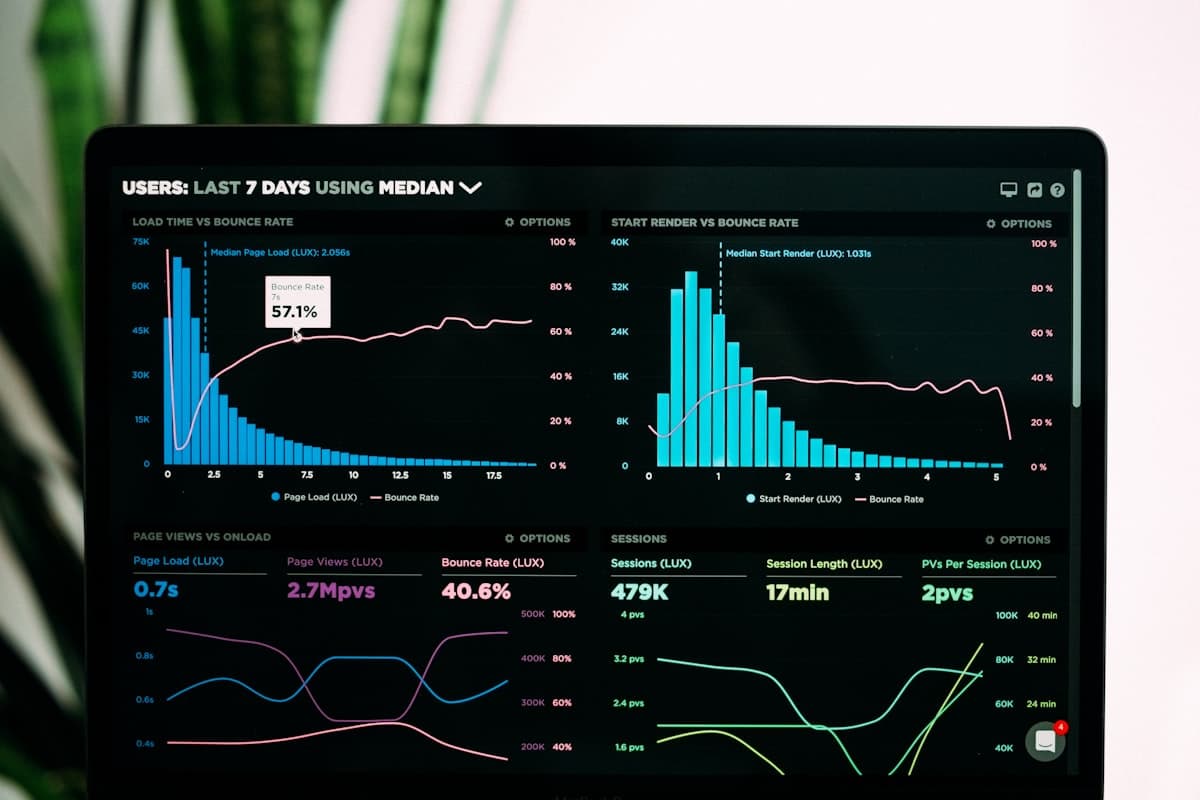
A productivity tracker is software that records how work time is actually spent — across applications, documents, projects and locations — and turns that record into something a manager can act on. That is the easy part to explain. The hard part, and the reason so many rollouts fail, is that 'productivity' is not a single number the software can read off a sensor. It is an inference built on top of raw activity data, and the quality of that inference depends entirely on what the tool measures and what you ask it to mean. This guide covers what these tools genuinely capture, the arithmetic behind the dashboards, where the measurements break down, and how to evaluate a tracker for a real team. It is written for the person who has to choose one and then defend that choice to both a finance director and the people being tracked.
Ready to Transform Your Productivity?
Join thousands of teams using Track Nexus to optimize their workforce productivity. Schedule a personalized demo today.