Remote Employee Monitoring: Building Trust While Maintaining Accountability
Track Nexus Editorial Team
Workforce Productivity Experts

Remote employee monitoring occupies one of the most contentious spaces in modern workplace management. Managers argue, correctly, that accountability does not disappear just because employees work from home. Employees argue, also correctly, that their home is not a panopticon and that trust should be the default, not something earned through surveillance. Both positions have merit, and the organizations that navigate this tension successfully are the ones that reject the false binary between monitoring and trust. A 2025 Owl Labs State of Remote Work report found that 67% of remote employees are comfortable with some form of activity tracking, provided it is transparent, proportionate, and used to support rather than punish. The same report found that organizations with transparent monitoring policies reported 23% higher remote employee engagement than those with no monitoring and 31% higher than those with covert monitoring. This guide provides a practical framework for monitoring remote employees in a way that maintains accountability, provides genuine productivity insights, and strengthens rather than erodes the trust that makes remote work effective.
The Trust and Accountability Framework
Effective remote monitoring rests on a framework that treats trust and accountability as complementary rather than opposing forces. Trust without accountability drifts into ambiguity, where expectations are unclear and underperformance persists because no one has objective data to identify it. Accountability without trust drifts into surveillance, where employees feel watched rather than supported and spend energy on appearing productive rather than being productive.
The framework has four components. First, clear expectations define what success looks like for each role, independent of when or where the work happens. These expectations should be outcome-based: deliverables completed, response times met, quality standards maintained. Time spent at a desk is not an outcome; it is a proxy, and a poor one.
Second, transparent measurement provides objective data on both outcomes and activity. This is where monitoring software plays a role, but the data should be shared bidirectionally. Managers see team activity patterns and project progress. Employees see their own productivity insights, focus time trends, and workload distribution. When both parties see the same data, conversations become collaborative rather than adversarial.
Third, regular check-ins create the human connection that remote work can erode. Data alone is insufficient; it needs context. A weekly one-on-one where manager and employee review productivity data together, discuss blockers, and adjust priorities builds the relationship that makes monitoring feel supportive rather than controlling.
Fourth, proportional response means that the monitoring intensity matches the trust level. New employees or those on performance improvement plans might have more detailed tracking. Established high performers might have minimal monitoring with primarily outcome-based accountability. This graduated approach respects individual track records while maintaining organizational standards.
What to Monitor (And What to Leave Alone)
The single most important decision in remote monitoring is scope: what you track and, equally important, what you explicitly choose not to track. Getting this right determines whether employees experience the monitoring as reasonable accountability or invasive surveillance.
Monitor activity patterns, not activity content. Knowing that an employee spent 6 hours in productive applications, 1.5 hours in communication tools, and 30 minutes untracked is useful management information. Knowing the specific content of their Slack messages, the exact web pages they visited, or the keystrokes they typed is almost never necessary for performance management and creates significant privacy and trust concerns.
Monitor outcomes and deliverables as the primary accountability mechanism. If a software engineer delivers high-quality code on time, the fact that they took a two-hour break in the afternoon to walk their dog is irrelevant, and monitoring systems that flag that break as problematic are optimizing for presence rather than performance.
Monitor work hours at the aggregate level for teams. Understanding that your remote team tends to start work between 8:30 and 9:30 AM, takes lunch between 12 and 1 PM, and winds down between 5 and 6 PM helps with meeting scheduling, availability expectations, and workload distribution. Tracking individual arrival and departure times to the minute signals a clock-watching mentality that undermines the flexibility that makes remote work attractive.
Do not monitor personal devices, after-hours activity, or non-work applications during designated break times. These boundaries should be explicit in your monitoring policy and enforced technically in the software configuration. TrackNexus allows administrators to define tracking schedules and exclude specific application categories, making it straightforward to implement these boundaries.
Do not use monitoring for micro-management decisions. If a manager is using activity data to question why an employee spent 20 minutes on a news site at 2 PM, the problem is not the employee's behavior but the manager's use of the tool.
Implementing Monitoring for Remote Teams
Introducing monitoring to an established remote team requires more care than deploying it for a new team. Existing remote employees chose remote work partly for the autonomy it provides, and a monitoring announcement can feel like a retroactive change to the social contract.
Start with a conversation, not an announcement. Before selecting a tool, discuss the challenges that monitoring is intended to address with the team. Are clients questioning whether hours billed are accurate? Is the team struggling with workload visibility? Are some team members working unsustainable hours without anyone noticing? Framing the discussion around a shared problem invites collaborative problem-solving rather than top-down imposition.
Involve the team in tool selection. Share your shortlist of two to three tools and let the team evaluate them. When employees have a voice in the decision, they feel ownership over the outcome. In practice, teams that participate in tool selection recommend the same privacy-respecting tools that HR would choose, so this participatory approach rarely leads to a worse outcome and significantly improves buy-in.
Deploy in stages. Start with the lightest monitoring level: automatic activity categorization with employee-accessible dashboards. Run it for 30 days and gather feedback. If the team finds value in the insights, they are usually open to additional features. If they find the tool burdensome or uninformative, you have feedback to guide configuration changes before expanding.
Establish a monitoring review cadence. Every quarter, review whether the current monitoring configuration is still appropriate. Have new concerns emerged that justify expanding scope? Have previous concerns been resolved, allowing scope reduction? This regular review signals that monitoring is a dynamic policy, not a permanent ratchet, and gives employees confidence that their feedback leads to change.
Address timezone challenges proactively. Distributed teams across multiple time zones need monitoring policies that respect different work schedules. Configure the software to recognize each employee's designated work hours rather than imposing a single tracking window, and ensure that asynchronous work patterns are not penalized by metrics designed for synchronous schedules.
Using Monitoring Data Constructively
The value of monitoring data is entirely determined by how it is used. The same dataset that can be weaponized for punitive management can also be used to improve team performance, prevent burnout, and make the case for resources the team needs.
Use data to identify and remove blockers. When monitoring reveals that a team member is spending 40% of their week in meetings and only 30% in the focused work that their role requires, the response should not be why are you in so many meetings but let us audit your meeting calendar and protect more focus time. TrackNexus's focus time analytics specifically surface this pattern and help managers take action.
Use data to distribute workload fairly. In remote teams, workload imbalances are invisible without objective data. When one person is consistently logging 50-hour weeks while a peer on the same project logs 35, the data enables a rebalancing conversation that prevents burnout on one side and drift on the other.
Use data to advocate for resources. When time tracking data shows that the team is operating at 110% capacity consistently, that data becomes a compelling business case for additional headcount. Objective data is far more persuasive than subjective assertions that we are overworked.
Use data for self-improvement. Encourage employees to use their personal productivity dashboards actively. Many remote workers are surprised by their own patterns: they did not realize they lose 45 minutes per day to context switching or that their most productive window is the first 90 minutes of the workday. These self-directed insights are often the most valued aspect of monitoring among remote employees.
Never use data as the primary basis for termination or disciplinary action. If performance is genuinely problematic, the deliverables and outcomes will tell that story independently. Monitoring data can provide context and corroborate concerns, but it should not be the trigger. Using it as a trigger teaches employees to game the metrics rather than improve their work.
Measuring Whether Your Approach Is Working
The success of remote monitoring should be evaluated on three dimensions: business outcomes, team sentiment, and data utilization.
Business outcomes are the easiest to measure. Track the KPIs that motivated the monitoring decision in the first place. If the goal was billing accuracy, compare billable hour capture rates before and after implementation. If the goal was project predictability, compare estimation accuracy. If the goal was workload visibility, measure the frequency and duration of workload imbalances. These metrics should improve within 60 to 90 days; if they do not, the monitoring configuration or the way data is being used needs adjustment.
Team sentiment requires deliberate measurement. Run an anonymous survey at 30, 60, and 90 days post-implementation with questions like: Do you find the productivity insights personally useful? Do you feel the monitoring is proportionate to the business need? Has the monitoring changed how you feel about working remotely? Track the trend, not just the absolute scores. A slight initial dip that recovers by day 60 is normal. A sustained decline is a warning sign.
Data utilization measures whether anyone is actually using the data to make decisions. If the monitoring generates reports that no one reads and dashboards that no one opens, you are paying the privacy cost without receiving the information benefit. Track how frequently managers access team reports, how often employees view their personal dashboards, and how many decisions in the past quarter were informed by monitoring data. If utilization is low, simplify the data presentation, provide training on interpretation, or scale back monitoring to only what is actively being used.
A 2025 Buffer State of Remote Work study found that the organizations with the highest remote employee satisfaction scores were those that could articulate specifically how monitoring data had improved a team process, prevented a burnout incident, or justified a resource allocation in the past quarter. The ability to point to concrete, positive outcomes is the ultimate validation of a remote monitoring program.
Want to See It in Action?
Explore how Track Nexus's AI-powered features can transform your team's productivity with a live demo.
Use Cases & Applications
Discover how organizations use this solution to improve their operations
Distributed Team Management
Maintain visibility into work patterns and availability across time zones without requiring constant synchronous communication
Project Delivery Assurance
Track progress on remote deliverables with objective activity data that complements milestone-based reporting
Burnout Prevention
Identify employees working unsustainable hours before burnout affects performance, health, and retention
New Hire Onboarding
Monitor onboarding progress for remote new hires and provide targeted support based on their ramp-up patterns
Frequently Asked Questions
Common questions about remote employee monitoring
How do you monitor remote employees without destroying trust?
What is the best tool for remote employee monitoring?
Should remote monitoring be the same for all employees?
Explore More Insights
Continue learning with these related articles

Remote Work Time Tracking: Essential Tools for Distributed Teams
Remote work time tracking addresses a fundamental challenge: how do you maintain accountability and accurate time records when your team works from home, coffee shops, and co-working spaces across multiple time zones? The answer is not surveillance but smart tracking tools that capture work activity passively, sync across devices, and provide both managers and remote employees with transparent productivity data.

Employee Monitoring Software: Ethical Oversight for Modern Teams
Employee monitoring software has evolved from simple keystroke loggers into comprehensive workforce analytics platforms. The global market reached $1.6 billion in 2025, driven by the permanent shift to hybrid work and the need for accountability without micromanagement. The best employee monitoring software balances organizational visibility with employee privacy, providing insights that help both managers and team members perform better.
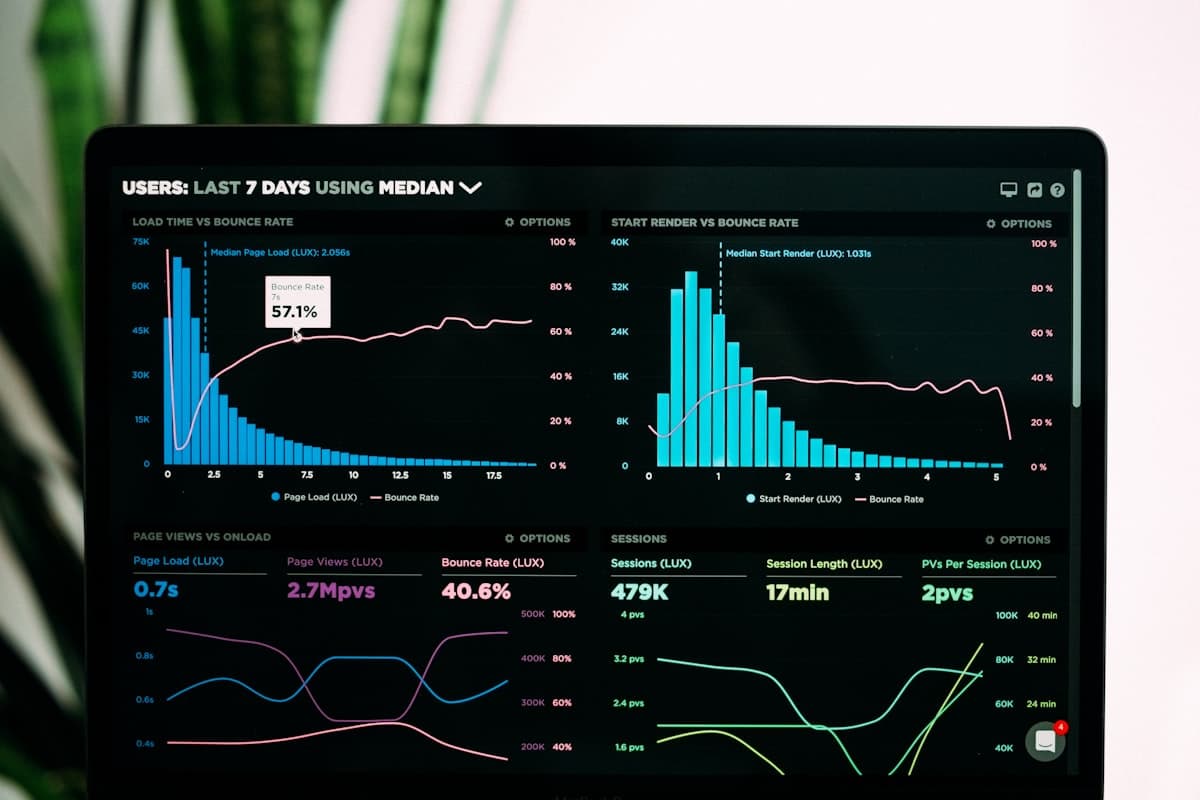
Productivity Tracker: How They Work, What They Measure, and How to Choose One
A productivity tracker is software that records how work time is actually spent — across applications, documents, projects and locations — and turns that record into something a manager can act on. That is the easy part to explain. The hard part, and the reason so many rollouts fail, is that 'productivity' is not a single number the software can read off a sensor. It is an inference built on top of raw activity data, and the quality of that inference depends entirely on what the tool measures and what you ask it to mean. This guide covers what these tools genuinely capture, the arithmetic behind the dashboards, where the measurements break down, and how to evaluate a tracker for a real team. It is written for the person who has to choose one and then defend that choice to both a finance director and the people being tracked.
Ready to Transform Your Productivity?
Join thousands of teams using Track Nexus to optimize their workforce productivity. Schedule a personalized demo today.