Time Tracking ROI Calculator: How Much Is Manual Tracking Costing You?
Track Nexus Editorial Team
Workforce Productivity Experts

Manual time tracking costs businesses far more than they realize. Between the administrative overhead of filling out timesheets, the revenue lost from forgotten billable hours, the payroll errors from inaccurate data, and the management time spent chasing compliance, the true cost of manual time tracking can reach 5-8% of total payroll for service-based businesses. For a 50-person company with an average salary of $70,000, that translates to $175,000-$280,000 in annual hidden costs. This guide breaks down the complete ROI equation for automated time tracking, provides an interactive calculator to estimate your organization's specific savings, and shares industry benchmarks to contextualize your results. Use Track Nexus to see how automated tracking delivers measurable ROI from the first week.
The Hidden Cost of Manual Time Tracking
The costs of manual time tracking extend far beyond the obvious. When organizations calculate the price of their current timekeeping processes, they typically consider only the direct cost of timesheet software licenses. The true cost includes multiple hidden components that compound across the organization.
Administrative Time Cost
Every employee who fills out a manual timesheet spends time on data entry rather than productive work. Research from workforce management studies reveals:
- Average time spent on manual time entry: 4.3 hours per employee per month
- Average time spent by managers reviewing and approving timesheets: 3.1 hours per manager per month
- Average time spent by payroll/finance on timesheet corrections: 7.2 hours per pay period
- Average time spent chasing late or incomplete timesheets: 2.5 hours per manager per month
For a 100-person organization with 10 managers, this represents approximately 540 hours per month of administrative overhead, equivalent to roughly 3.4 full-time employees doing nothing but timesheet administration.
Revenue Leakage from Inaccurate Tracking
For organizations that bill clients based on time, manual tracking directly impacts revenue:
- Studies consistently show that employees who track time manually underreport by 15-40% compared to automated tracking
- The average professional forgets to log 8-12 small tasks per day (quick emails, phone calls, brief meetings)
- End-of-week timesheet completion leads to "memory decay" where employees cannot accurately recall how they spent their time 3-5 days ago
- Conservative estimates suggest service businesses lose $50,000-$150,000 per year per 10 billable employees
Payroll Errors and Compliance Risk
Manual time entry introduces errors that cascade into payroll processing:
- The American Payroll Association estimates that the error rate for manual time and attendance processes is 1-8%
- Buddy punching (employees clocking in for absent colleagues) costs US employers an estimated $373 million annually
- Overtime calculation errors expose organizations to wage and hour lawsuits, which have averaged $13.5 million in settlements for large employers
- In the EU, incorrect working time records can result in penalties under the Working Time Directive
Opportunity Cost
Perhaps the largest hidden cost is the opportunity cost of what employees and managers could accomplish with the time they spend on manual tracking:
- Developers could write code instead of filling out timesheets
- Consultants could serve clients instead of reconstructing their week
- Managers could coach their teams instead of chasing timesheet compliance
- Finance teams could focus on strategic analysis instead of data cleanup
Employee Frustration and Turnover
Manual timesheets are consistently rated among the most disliked administrative tasks by employees. While difficult to quantify precisely, the impact on employee satisfaction and retention is real. Organizations with burdensome administrative processes see higher voluntary turnover, and replacing an employee costs 50-200% of their annual salary.
Understanding the Time Tracking ROI Formula
Calculating the ROI of automated time tracking requires quantifying both the costs saved and the revenue recovered. The formula considers multiple value drivers that vary by organization type, size, and industry.
The Complete ROI Formula
ROI = ((Total Annual Benefits - Total Annual Costs) / Total Annual Costs) x 100
Where Total Annual Benefits include:
1. Administrative Time Savings
- Hours saved per employee per month on time entry x average hourly cost x 12 months x number of employees
- Hours saved per manager per month on approvals x average manager hourly cost x 12 months x number of managers
- Hours saved per payroll cycle on corrections x payroll staff cost x number of cycles per year
2. Revenue Recovery (for billing organizations)
- Additional billable hours captured per employee per day x billing rate x working days per year x number of billable employees x collection rate
3. Payroll Accuracy Savings
- Reduction in overtime calculation errors x average overpayment per error
- Elimination of buddy punching losses
- Reduced wage and hour compliance risk (estimated lawsuit avoidance value)
4. Productivity Gains
- Improved project estimation accuracy leading to better resource allocation
- Reduced context switching from eliminating manual time entry interruptions
- Better workload balancing through visibility into team capacity
And Total Annual Costs include:
- Software subscription fees (per user per month x 12 x number of users)
- Implementation and training costs (one-time, amortized over first year)
- Ongoing administration costs (minimal with modern solutions)
Simplified Calculation Example
For a professional services firm with 50 employees:
- Administrative time savings: 50 employees x 4 hours/month x $40/hour x 12 = $96,000
- Revenue recovery: 50 employees x 0.8 additional hours/day x $120/hour x 250 days x 0.85 collection rate = $1,020,000
- Payroll accuracy: $25,000 annual savings
- Total annual benefits: $1,141,000
- Software cost: 50 x $8/user/month x 12 = $4,800
- Implementation: $2,000 (one-time)
- Total annual cost: $6,800
- First year ROI: (($1,141,000 - $6,800) / $6,800) x 100 = 16,679%
Even using highly conservative assumptions (halving the revenue recovery estimate), the ROI remains compelling. This is why time tracking software has one of the highest ROI ratios of any business technology investment.
Non-Financial Benefits
Beyond the quantifiable financial returns, automated time tracking delivers benefits that are harder to assign dollar values to but equally important:
- Improved project visibility and early warning for at-risk projects
- Better data for strategic decisions about pricing, staffing, and service offerings
- Enhanced client trust through transparent, detailed billing
- Reduced employee frustration with administrative processes
- Compliance confidence for labor law and tax audits
Interactive ROI Calculator
Use the interactive calculator below to estimate the specific ROI for your organization. Input your company's metrics and see a personalized projection of potential savings and revenue recovery from implementing automated time tracking.
How to Use This Calculator
Enter your organization's key metrics:
- Number of employees: Total employees who currently track time
- Average hourly cost: Fully loaded cost per employee hour (salary + benefits + overhead, divided by annual hours). For a quick estimate, multiply average annual salary by 1.3 and divide by 2,080.
- Billing rate (if applicable): Average client billing rate per hour
- Current tracking method: Manual timesheets, spreadsheets, basic software, or no formal tracking
- Industry: Select your industry for benchmarked assumptions
The calculator uses conservative assumptions based on aggregated data from thousands of organizations that have transitioned from manual to automated time tracking. Actual results may vary based on your specific circumstances, but the calculator provides a reliable directional estimate.
What the Results Show
The calculator outputs four key metrics:
- Annual administrative savings: Time and cost recovered from eliminating manual tracking processes
- Annual revenue recovery: Additional billable revenue captured through more complete time tracking (for billing organizations)
- Total annual benefit: Combined financial impact
- Payback period: How quickly the investment pays for itself (typically measured in days, not months)
Conservative vs. Optimistic Scenarios
The calculator provides three scenarios to help you build a realistic business case:
- Conservative: Uses the 25th percentile of observed improvements across similar organizations. Useful for the minimum expected return.
- Realistic: Uses the median of observed improvements. The most likely outcome based on aggregate data.
- Optimistic: Uses the 75th percentile of observed improvements. Achievable with strong adoption and process optimization.
All three scenarios represent real outcomes observed in organizations that have implemented automated time tracking. The variation is primarily driven by adoption rates and the degree to which organizations leverage the data for process improvement beyond simple time capture.
Industry Benchmarks: How Your Industry Compares
Adoption of automated time tracking varies significantly across industries, driven by factors such as billing models, regulatory requirements, workforce characteristics, and technology maturity. Understanding where your industry stands helps contextualize your ROI potential and identify opportunities.
IT and Software Development (89% adoption)
The technology sector leads adoption due to its familiarity with digital tools and the prevalence of project-based billing. Key drivers include Jira and project management integration, sprint tracking requirements, and client billing for consulting engagements. Average ROI: 350-800% in the first year.
Professional Services (85% adoption)
Consulting firms, accounting practices, and advisory businesses rely heavily on accurate time tracking for client billing. The billable hour model creates a direct revenue linkage that makes the ROI case straightforward. Average ROI: 400-1,200% driven primarily by revenue recovery.
Construction (78% adoption)
The construction industry has rapidly adopted time tracking technology driven by prevailing wage requirements, Davis-Bacon compliance, and the challenge of managing distributed field workforces across multiple job sites. GPS and geofencing capabilities are key differentiators. Average ROI: 200-500%.
Healthcare (72% adoption)
Healthcare organizations track time for staff scheduling, patient care documentation, and compliance with staffing ratios. Adoption is driven by regulatory requirements and the need to optimize staffing costs, which represent 50-60% of hospital operating budgets. Average ROI: 250-600%.
Legal (68% adoption)
Despite the legal industry's complete dependence on the billable hour, adoption of modern tracking tools has been slower than expected, partly due to conservative technology adoption culture and concerns about data security. However, firms that adopt see some of the highest ROI due to direct revenue recovery. Average ROI: 500-1,500%.
Education (55% adoption)
Educational institutions use time tracking primarily for grant-funded research compliance, adjunct faculty hour tracking, and administrative staff management. Adoption is growing as funding agencies increase documentation requirements. Average ROI: 150-350%.
Manufacturing (52% adoption)
Manufacturing time tracking focuses on production floor labor, shift management, and job costing. Adoption has been slower due to the prevalence of legacy punch-clock systems and union considerations around monitoring. Average ROI: 200-400%.
Retail (45% adoption)
Retail has the lowest adoption among major industries, largely because most retail time tracking needs are met by POS-integrated scheduling systems. However, corporate and distribution center staff increasingly benefit from automated tracking. Average ROI: 100-250%.
Key Takeaway
Regardless of industry, organizations that implement automated time tracking see positive ROI within the first 30-90 days. Industries with billable-hour models (legal, consulting, IT services) see the highest absolute returns, while industries with large hourly workforces (healthcare, construction) see the fastest payback periods due to payroll accuracy improvements.
Making the Business Case: Presenting ROI to Decision Makers
Securing budget approval for time tracking software requires presenting a compelling business case that speaks to the priorities of different stakeholders. Here is how to structure your proposal for maximum impact.
For the CFO: Financial Impact
CFOs care about measurable financial outcomes. Lead with:
- Hard dollar savings from administrative overhead reduction
- Revenue recovery projections with conservative, realistic, and optimistic scenarios
- Payback period calculation (typically under 30 days for billing organizations)
- Comparison of annual software cost vs. annual benefit (often a 100:1 ratio or better)
- Risk reduction from improved payroll accuracy and compliance
Present the data in a one-page financial summary with clear assumptions and sources. Include a sensitivity analysis showing that even if benefits are 50% lower than projected, the investment remains highly profitable.
For the COO/VP of Operations: Efficiency Gains
Operations leaders focus on process improvement and scalability:
- Elimination of manual timesheet collection and correction processes
- Reduction in manager time spent on administrative oversight
- Improved project estimation and resource planning accuracy
- Scalability (adding employees does not require adding administrative overhead)
- Integration with existing tools (ERP, project management, billing systems)
For the CHRO/VP of HR: Employee Experience
HR leaders care about employee satisfaction and compliance:
- Reduction in employee frustration with manual timesheets
- Fair and transparent tracking that eliminates timesheet disputes
- Improved work-life balance insights from accurate workload data
- Compliance confidence for labor law audits
- Support for flexible and remote work arrangements
For the CTO/VP of Engineering: Technical Fit
Technology leaders evaluate technical requirements:
- Integration capabilities with existing tech stack
- Security and data protection standards
- Deployment and maintenance requirements
- API availability for custom integrations
- Scalability and performance characteristics
Building the Presentation
Structure your business case document as follows:
1. Executive Summary (1 page): Problem statement, proposed solution, expected ROI, recommended action
2. Current State Analysis (1-2 pages): Document the current cost of manual tracking with real data from your organization
3. Proposed Solution (1 page): Brief description of automated tracking and why it addresses the current state issues
4. Financial Analysis (2-3 pages): Detailed ROI calculation with assumptions, scenarios, and sensitivity analysis
5. Implementation Plan (1 page): Timeline, resource requirements, and risk mitigation
6. Appendix: Vendor comparison, reference customers, technical requirements
Common Objections and Responses
- "We already track time with spreadsheets": Spreadsheets capture only 60-70% of actual time and cost more in administrative overhead than automated solutions.
- "Our team will resist being tracked": Modern time tracking is positioned as a productivity tool, not surveillance. Employee adoption rates exceed 90% when implemented with transparency and focusing on the benefits to employees (less admin work, fair workload distribution).
- "The cost is hard to justify": The ROI calculator shows that even the most conservative projections yield a payback period measured in days, not months. The real question is: can you afford not to implement it?
- "We are too small/too large": Time tracking ROI scales linearly. A 5-person team saves proportionally the same as a 5,000-person organization. Implementation complexity varies, but the per-employee economics remain consistent.
Want to See It in Action?
Explore how Track Nexus's AI-powered features can transform your team's productivity with a live demo.
Use Cases & Applications
Discover how organizations use this solution to improve their operations
Small Businesses
Small businesses with 5-25 employees often lack dedicated HR or finance staff to manage time tracking. Automated solutions eliminate the administrative burden while providing accurate data for payroll, invoicing, and profitability analysis.
Growing Teams
Companies scaling from 25 to 100+ employees face a critical transition where manual processes break down. Automated time tracking prevents the need to hire additional administrative staff purely to manage timesheet collection and processing.
Enterprise
Large enterprises with thousands of employees need consistent, auditable time tracking across departments, divisions, and geographies. The ROI at scale is measured in millions of dollars annually from payroll accuracy, compliance, and operational efficiency.
Agencies
Creative, marketing, and digital agencies bill clients by the hour or need accurate time data for project profitability analysis. Automated tracking captures time across multiple client projects simultaneously, maximizing billable utilization.
Frequently Asked Questions
Common questions about time tracking roi calculator
How quickly does automated time tracking pay for itself?
What is the average ROI for time tracking software?
How do you calculate the cost of manual time tracking?
Does the ROI calculation account for implementation costs?
Can time tracking ROI be negative?
Explore More Insights
Continue learning with these related articles
Productivity Tracker: How They Work, What They Measure, and How to Choose One
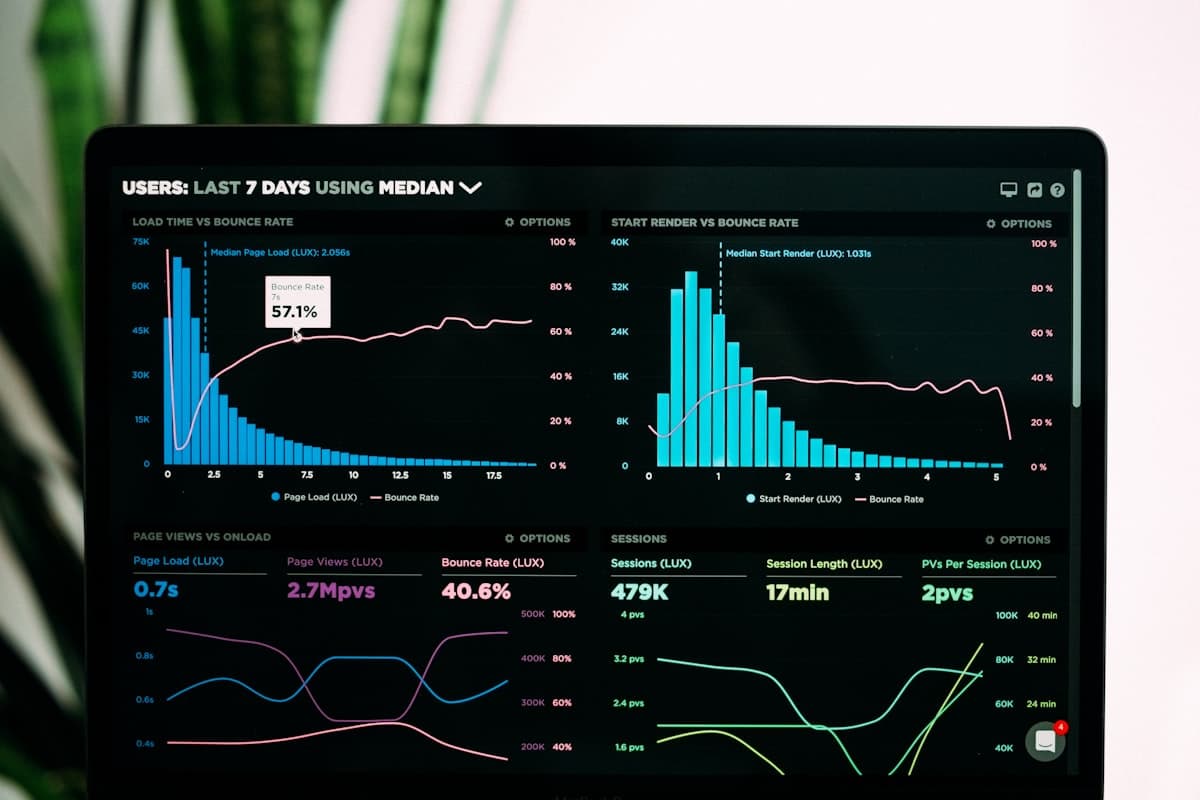
A productivity tracker is software that records how work time is actually spent — across applications, documents, projects and locations — and turns that record into something a manager can act on. That is the easy part to explain. The hard part, and the reason so many rollouts fail, is that 'productivity' is not a single number the software can read off a sensor. It is an inference built on top of raw activity data, and the quality of that inference depends entirely on what the tool measures and what you ask it to mean. This guide covers what these tools genuinely capture, the arithmetic behind the dashboards, where the measurements break down, and how to evaluate a tracker for a real team. It is written for the person who has to choose one and then defend that choice to both a finance director and the people being tracked.

Project Profitability: Maximizing ROI on Every Project
Project profitability separates successful services businesses from those that stay busy but never build margin. The core calculation is straightforward: revenue minus direct costs (primarily labor), divided by revenue. But getting accurate labor costs requires connecting time tracking data to employee cost rates at the task level, something most organizations only do retrospectively when the project is already over budget.

Time Tracking for Agencies: Increase Project Profitability by 25%
The average agency operates on razor-thin margins, with profitability often hinging on whether teams accurately track and bill for the hours they work. Industry research reveals a troubling pattern: agencies lose 20-30% of billable time to untracked work, scope creep, and inefficient resource allocation. A creative director who spends 45 minutes on an unscheduled client call, a developer who absorbs two hours of revision requests without logging them, a project manager who forgets to track the time spent coordinating freelancers. These individually small lapses compound into hundreds of thousands of dollars in lost revenue annually. Whether you run a digital marketing agency in London, a creative studio in New York, or a web development shop in Singapore, the profitability equation is the same: you must track every billable hour, allocate resources to your highest-margin clients, and detect scope creep before it erodes project margins. AI-powered time tracking gives agencies the visibility they need to increase project profitability by 25% or more. Try Track Nexus to see how leading agencies worldwide are transforming their financial performance.
Ready to Transform Your Productivity?
Join thousands of teams using Track Nexus to optimize their workforce productivity. Schedule a personalized demo today.